
A Promising Future
ANDE inaugurated the Valenzuela Substation in May of this year.
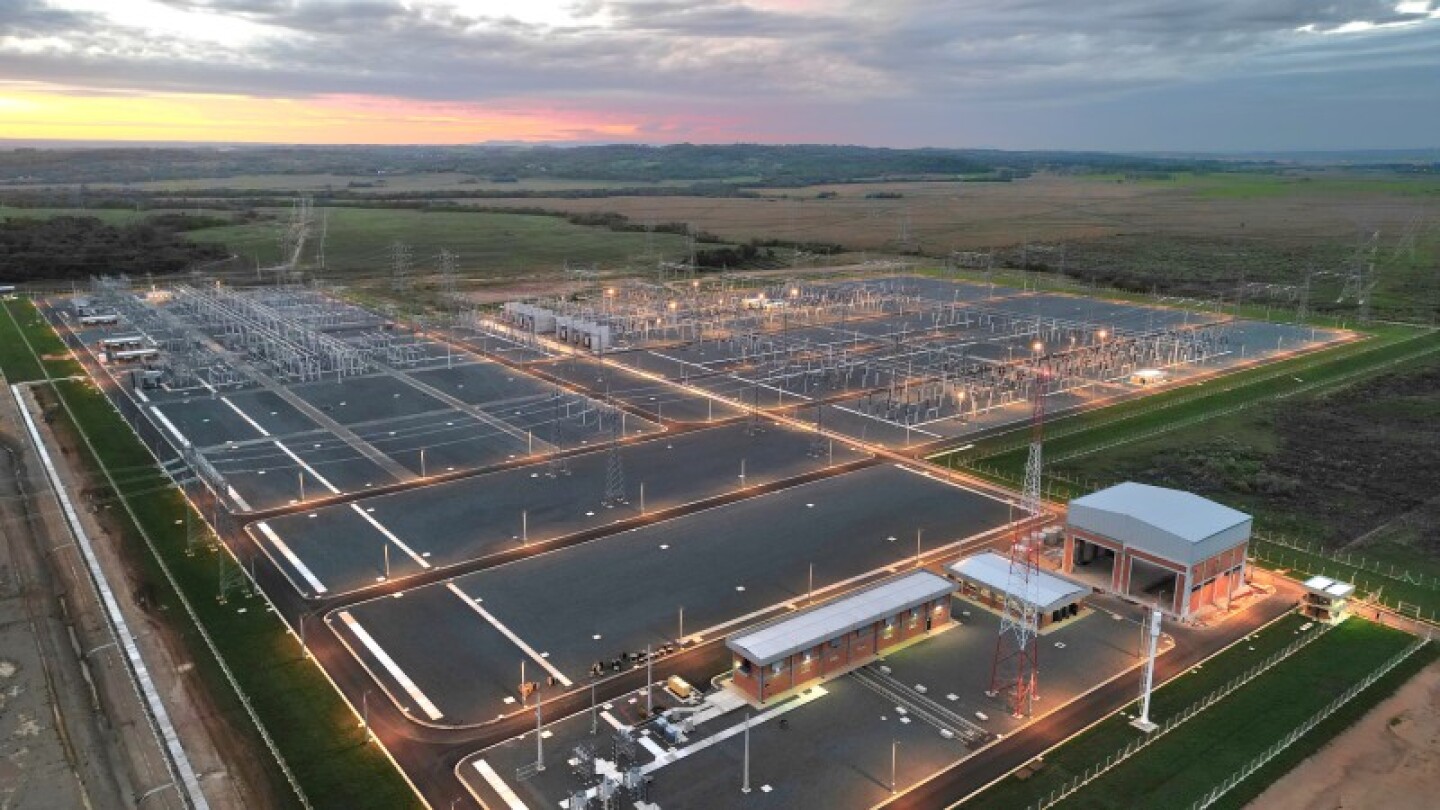
ANDE inaugurated the Valenzuela Substation in May of this year.
Energy is, without a doubt, the most strategic resource for development. Paraguay enjoys an advantage that many countries in the region view with envy: availability of quality energy in quantity and a 100% renewable energy matrix thanks to our hydroelectric plants. Now, with the new Valenzuela substation, we are gaining strength to meet increasingly sophisticated industrial demand.
The Valenzuela substation is not just another project on the list of electrical projects. It is a key element that allows us to more efficiently distribute the energy we generate in abundance and that, until now, in many cases ended up being exported at prices that do not reflect its true value, simply because we lacked the infrastructure to utilize it at home. With this new capacity, Paraguay sends a clear message: we are ready to transform our energy into industry, to welcome electro-intensive projects and all those companies that need a reliable, high-capacity supply to operate on a large scale.
A promising future is emerging. Electro-intensive industries, data centers, Bitcoin mining, green hydrogen production, metallurgy, and chemistry are not simply "large consumers." They are drivers of employment, innovation hubs, and catalysts for foreign direct investment. Intelligently integrated into our economy, they can multiply tax revenue, streamline logistics, and generate productive chains that strengthen local suppliers.
While several countries in the region suffer from energy instability, dependence on fossil fuels, and saturated grids, Paraguay has a triple advantage: clean, abundant, and low-cost energy. In a world where the energy transition is a priority, competitiveness is no longer measured solely by cheap labor or tax incentives, but by access to reliable, renewable energy. That is our advantage.
But a comparative advantage does not last forever if it is not transformed into a competitive advantage. Having energy available is not enough; we need regulatory, logistical, and contractual conditions that make companies choose to locate here. The Valenzuela substation gives us the technical capacity, but the real challenge is to support it with clear rules, reasonable deadlines, and a long-term vision.
Electro-intensive industries are more than customers: they are strategic allies. They not only pay for energy, they can also absorb surpluses during off-peak hours, stabilize demand, and allow ANDE to plan investments with predictability. They can even become technological partners to modernize the National Interconnected System, as is already happening in other countries where interaction with large consumers drives improvements in transmission, storage, and digitalization.
The time is now. The world is competing fiercely to attract industrial capital. Brazil and Chile, with higher rates and less electricity availability, are already looking for ways to stay ahead. Paraguay, on the other hand, has real megawatts, ready to be used, and renewable. This isn't a promise: it's a tangible advantage.
Valenzuela is a sign that we can play in the big leagues. This isn't just talk about the future: it's infrastructure ready to operate. It means we can offer guarantees to projects that require continuous energy stability and cannot afford to be shut down.
This is not an opportunity for just one sector: competitive energy benefits the entire Paraguayan economic matrix. From the small workshop that wants to grow, to the industrial park looking for new tenants. From the agro-industry that wants to process more locally, to the digital economies that require constant power and connectivity.
Therefore, this must be a permanent topic of conversation at all levels: government, business, academia, and citizens. There is no other strategy capable of transforming our economy in the next decade with the same power as fully harnessing our energy.
If we play our cards right, this will not just be a promising future. It will be the present that, in a few years, we will remember as the moment we decided to stop exporting cheap energy and start exporting added value. Because when energy stays at home, so does progress.